
Example: a café menu, portions and prices
You're in Türkiye looking at unfamiliar dish names. You'd like a cheese börek and want to understand its price. This photograph uses pieces, half portions and kilograms: a useful translation needs to preserve the difference.
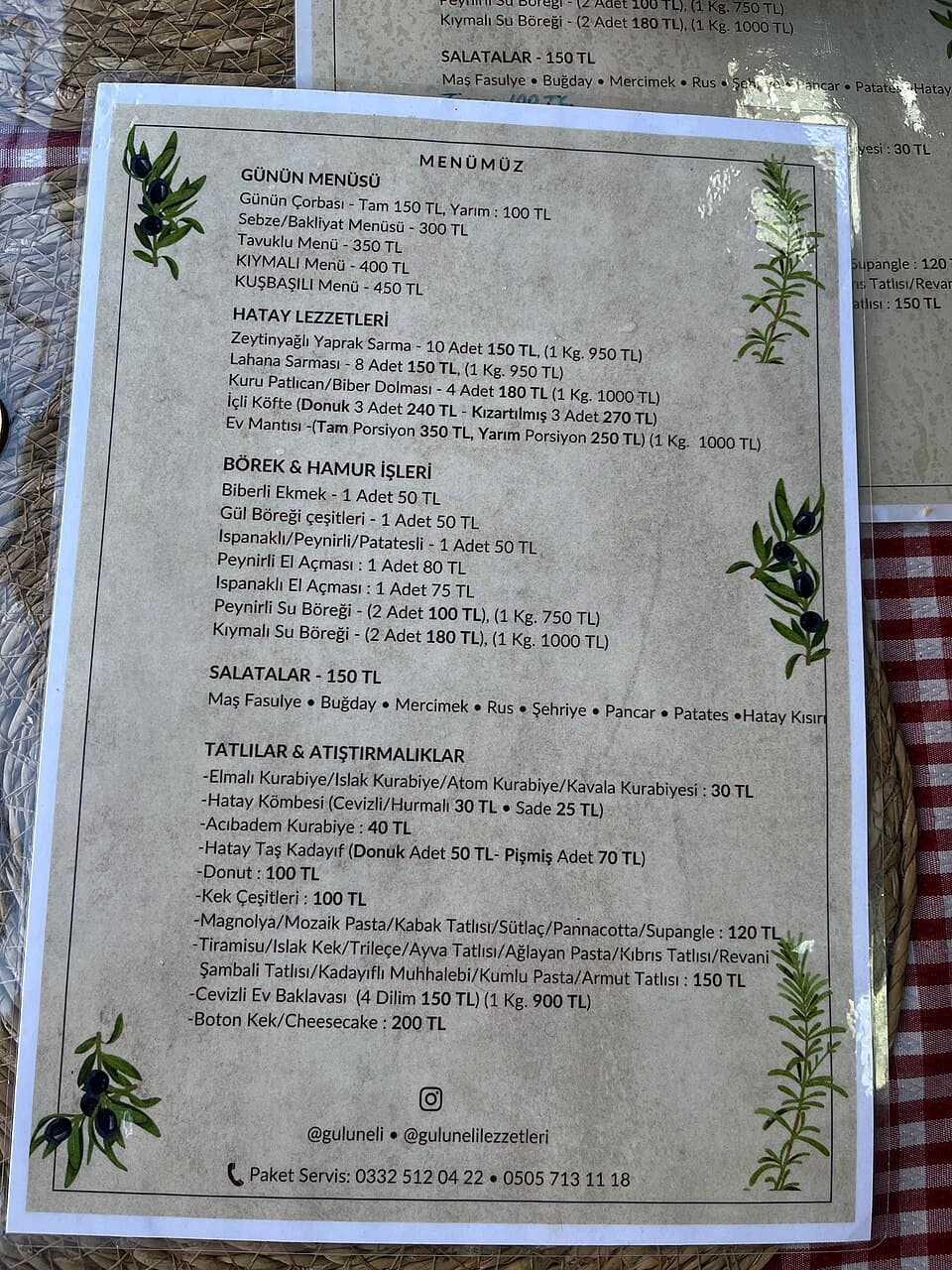 Open full-size photo
| Line in the photograph | What it means |
|---|---|
| Günün Çorbası | Soup of the day: a full portion is 150 lira; a half portion is 100 lira. |
| Peynirli Su Böreği | Cheese börek: two pieces cost 100 lira. A separate price is 750 lira per kilogram. |
| Kıymalı Su Böreği | Börek with minced meat: two pieces cost 180 lira; one kilogram costs 1000 lira. |
The photograph uses different ordering units: pieces, half portions and kilograms. The translation needs to preserve them.
Take a useful photograph of the text
Use the attachment button in chat to share the image. If it contains personal information that isn't needed, keep only the relevant area.
- Include the complete notice rather than cutting off its first or last words.
- Check focus and glare. A separate close-up can help with small print.
- Retain useful context, such as a heading, nearby line or the object label.
- Name the target language and your goal: the whole notice, one sentence or the meaning of a word.
- Compare important names, numbers, units and negatives with the original.
What to ask after translating
After translating, you can discuss names, compare the visible prices and prepare a question for staff. If the complete ingredients aren't printed, check them separately.
- 'Is that price for a piece, a portion or a weight?'
- 'How do the cheese and meat versions differ by name?'
- 'Help me ask whether I can order a single piece.'
- 'Read another line and identify anything uncertain.'